
Options Strategy: Covered Calls — Active Management
In the Covered Call beginner's guide, we introduced it as the first strategy for new traders. That was the "first encounter" version — buy t…
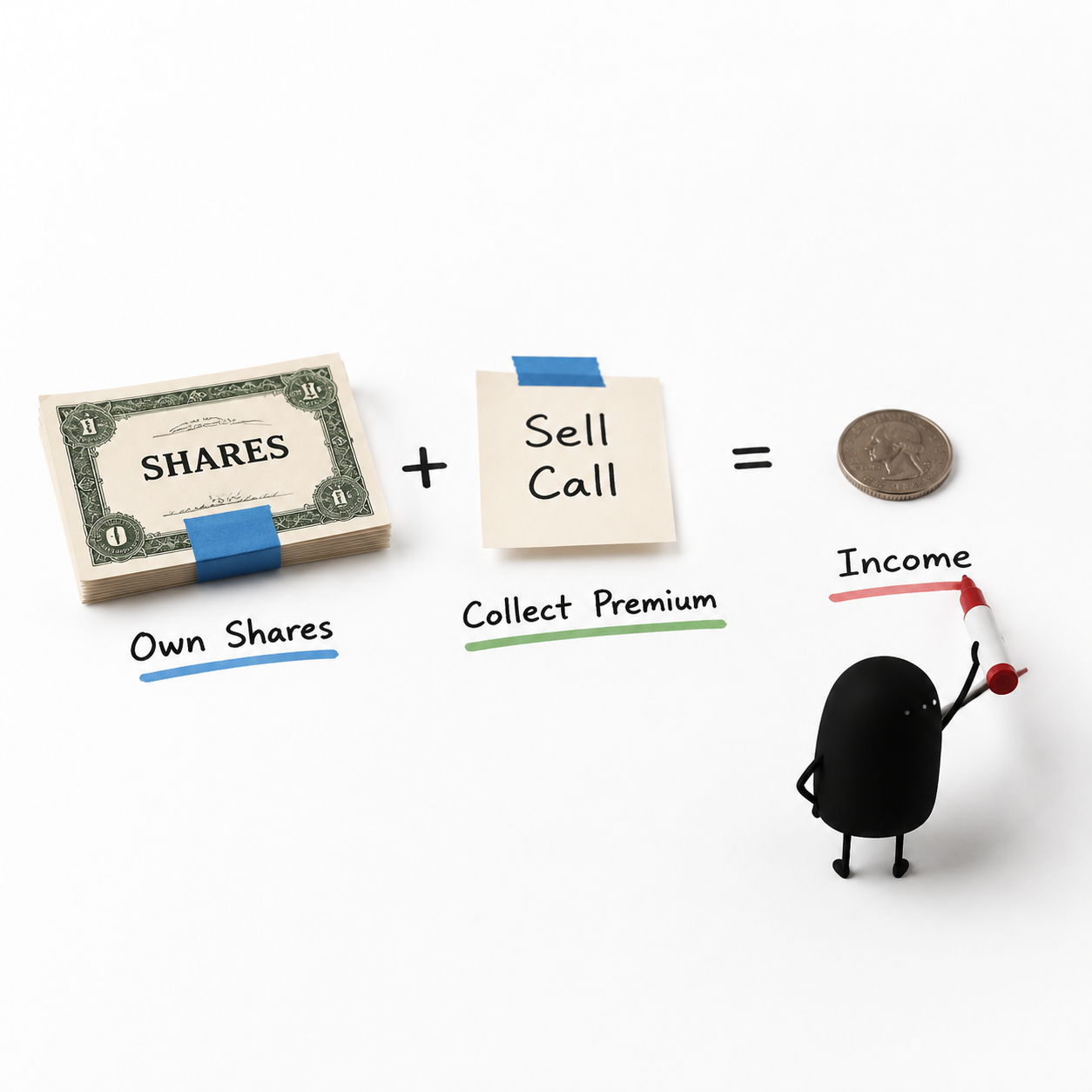
In the Covered Call beginner's guide, we introduced it as the first strategy for new traders. That was the "first encounter" version — buy the stock, sell an OTM call, hold to expiration.
This article upgrades it to the "active management" version. You'll see that a covered call isn't a one-time operation — it's a system you can roll monthly, collect rent continuously.
Recap: The Core Formula
Covered Call return = stock P&L + premium received from selling the call
When you sell a call, you sacrifice some of the stock's potential upside in exchange for immediate cash flow and downside protection.
Advanced Step 1: Choosing the Right Underlying
Not every stock is good for covered calls. These characteristics significantly affect your results:
| Characteristic | Good for CC? | Reason |
|---|---|---|
| High volatility | ✅ Excellent | Options are more expensive; premium is fat |
| Low volatility | ❌ Not ideal | Premium is too thin to be worthwhile |
| Dividend-paying stock | ⚠️ Careful | Strike price needs to account for the dividend |
| Stock you want to hold long-term | ✅ Excellent | You don't mind being called away or buying back |
| Stock you're extremely bullish on | ❌ Not suitable | CC caps your upside |
Beginner advice: Start with stocks you already own and want to hold medium to long-term. Don't buy a stock you don't understand just to run covered calls on it.
Advanced Step 2: Choosing the Right Strike and Expiration
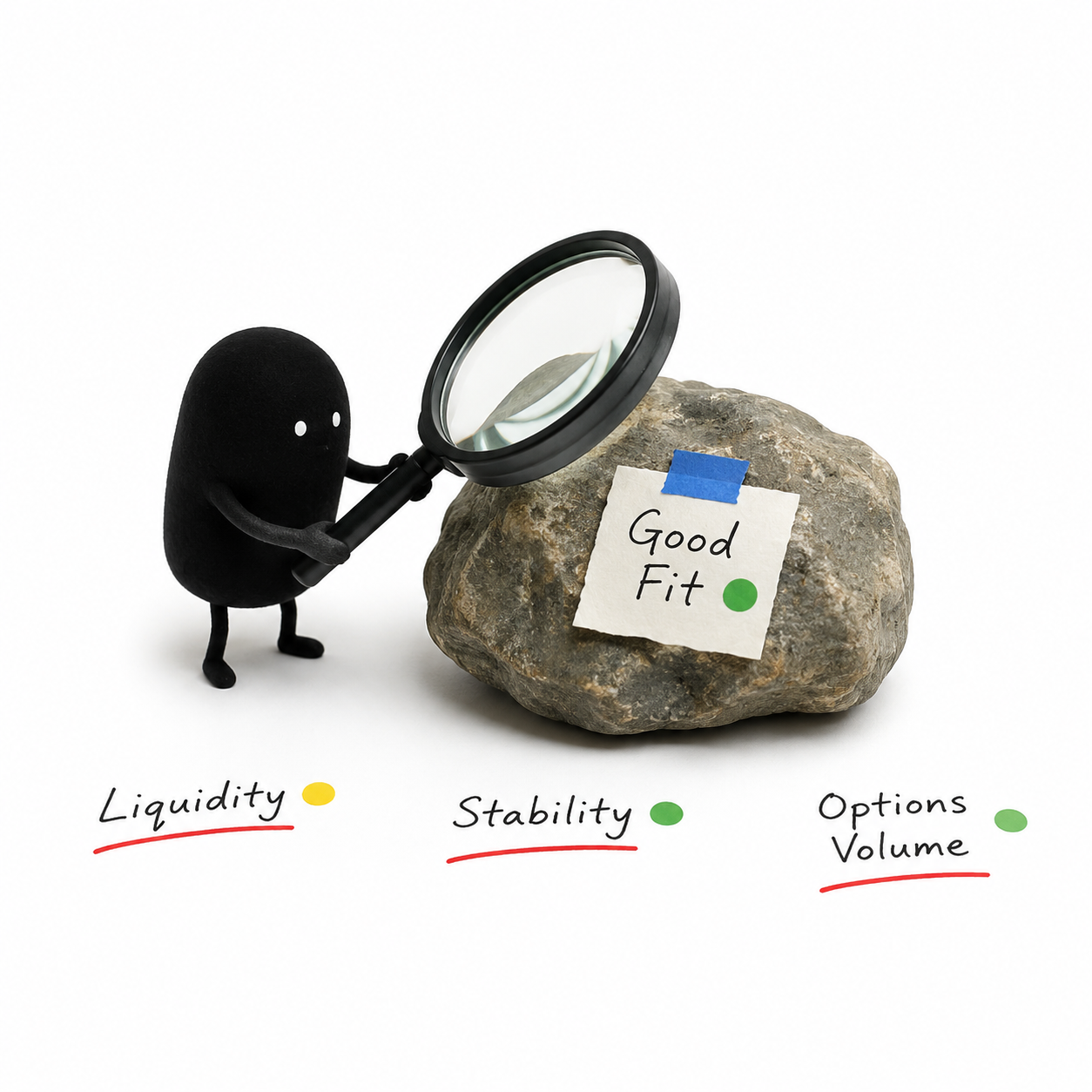
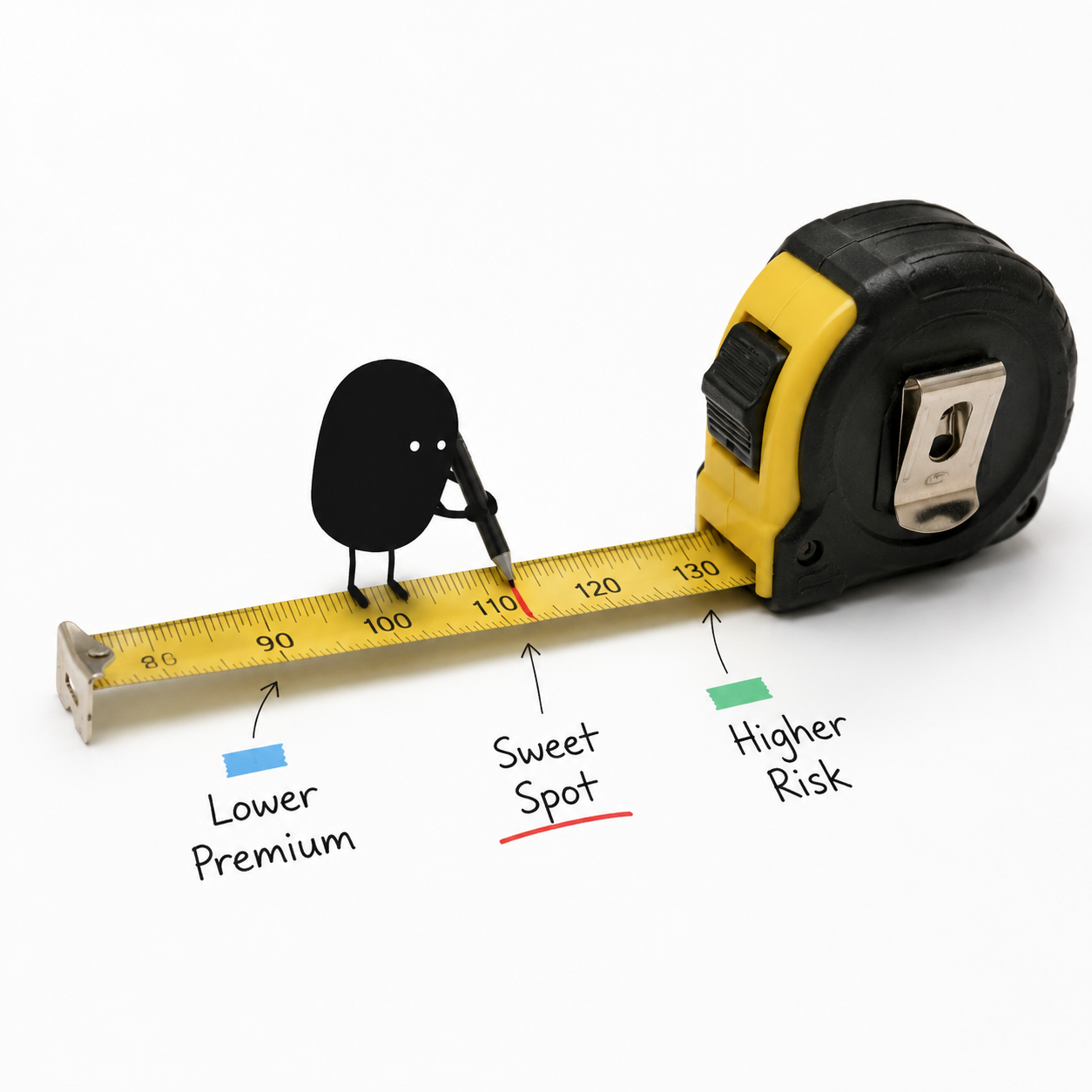
This is the most critical decision in running covered calls. Here's a comparison:
| Strike Choice | Premium | Upside Retained | Downside Protection | Best For |
|---|---|---|---|---|
| Deep OTM (>15% OTM) | Low | High | Low | Mildly bullish |
| Slightly OTM (5%-10% OTM) | Moderate | Moderate | Moderate | Beginner's first choice |
| At the money (ATM) | High | Low | High | Neutral or mildly bearish |
| In the money (ITM) | Very high | Almost none | Very high | Ready to sell the stock |
Expiration selection:
| Expiration | Time Value (Premium) | Management Frequency | Flexibility |
|---|---|---|---|
| 1 week | Low | High | High |
| 3-4 weeks | Moderate | Moderate | Moderate (recommended for beginners) |
| 1-3 months | High | Low | Low (capital locked up) |
Beginner rule: Choose 3-6 weeks to expiration, with a strike 5%-10% above the current price. This is the "balanced but reliable" choice.
Advanced Step 3: Rolling — What to Do When You're About to Get Called Away?
This is the most practical skill in covered call management. When the stock approaches or exceeds your strike, you have three options:
Option A: Do nothing — let the stock get called away
- Result: you sell the stock at the strike, earning the premium + limited capital gain.
- Suitable for: you expect the stock might pull back, or you're ready to sell anyway.
Option B: Buy to close (BTC)
- Action: buy back the call you sold (usually at a loss, since the call is more expensive now).
- Result: you give up the premium (possibly net negative), but retain the stock.
- Suitable for: you're strongly bullish on further upside and don't want to get called away.
Option C: Roll (the recommended active management approach)
- Action: buy to close the current call (lose some), and simultaneously sell a call in the next cycle (higher strike or further expiration).
- Result: the new premium covers the old loss, achieving a net positive credit overall while moving your strike higher.
- Suitable for: most situations where "stock has approached the strike but hasn't hit it yet."
A simple rolling example:
- Stock at $100. You sold the $105 call for $2.
- Stock rises to $104; the $105 call is now worth $1.50.
- You buy to close (pay $1.50), netting $0.50 on the first leg ($2 − $1.50).
- Simultaneously, sell next month's $110 call for $1.80.
- Net result: you keep the stock, strike moved from $105 to $110, and collected an additional $0.50 + $1.80 = $2.30.
Advanced Step 4: Track Your "Cost Reduction"
Every time you successfully sell a covered call and collect premium, your cost basis drops.
| Action | Cost Basis (per share) |
|---|---|
| Buy 100 shares @ $100 | $100 |
| Sell $105 call, collect $2 | $98 |
| Roll once, collect $1.50 more | $96.50 |
| Roll again, collect $1.20 more | $95.30 |
When your cost basis reaches $0 or below, you have a "zero-cost position" — no matter how far the stock falls, you can't lose money. This is the ultimate appeal of covered calls, fully realized through active management.
Three "Don'ts" for Beginners
- Don't chase a stock higher just to run a covered call on it. CC can't offset the risk of buying at the top.
- Don't sell calls before earnings or major events. If the stock rockets, your call will be deep ITM and rolling will be very expensive.
- Don't sell deep ITM calls. That's essentially "being forced to sell the stock" — the premium won't compensate for what you lose.
One-Line Summary
A covered call isn't a one-shot trade — it's a system of "monthly rent collection, rolling management, and continuous cost reduction."
Once you've mastered covered calls, we can move on to the next strategy — Cash-Secured Puts. You'll find these two strategies are two sides of the same coin.