
Options Strategy: Cash-Secured Puts
If you already understand Covered Calls, CashSecured Puts (CSP) will feel completely natural. They're two sides of the same coin. Covered Ca…
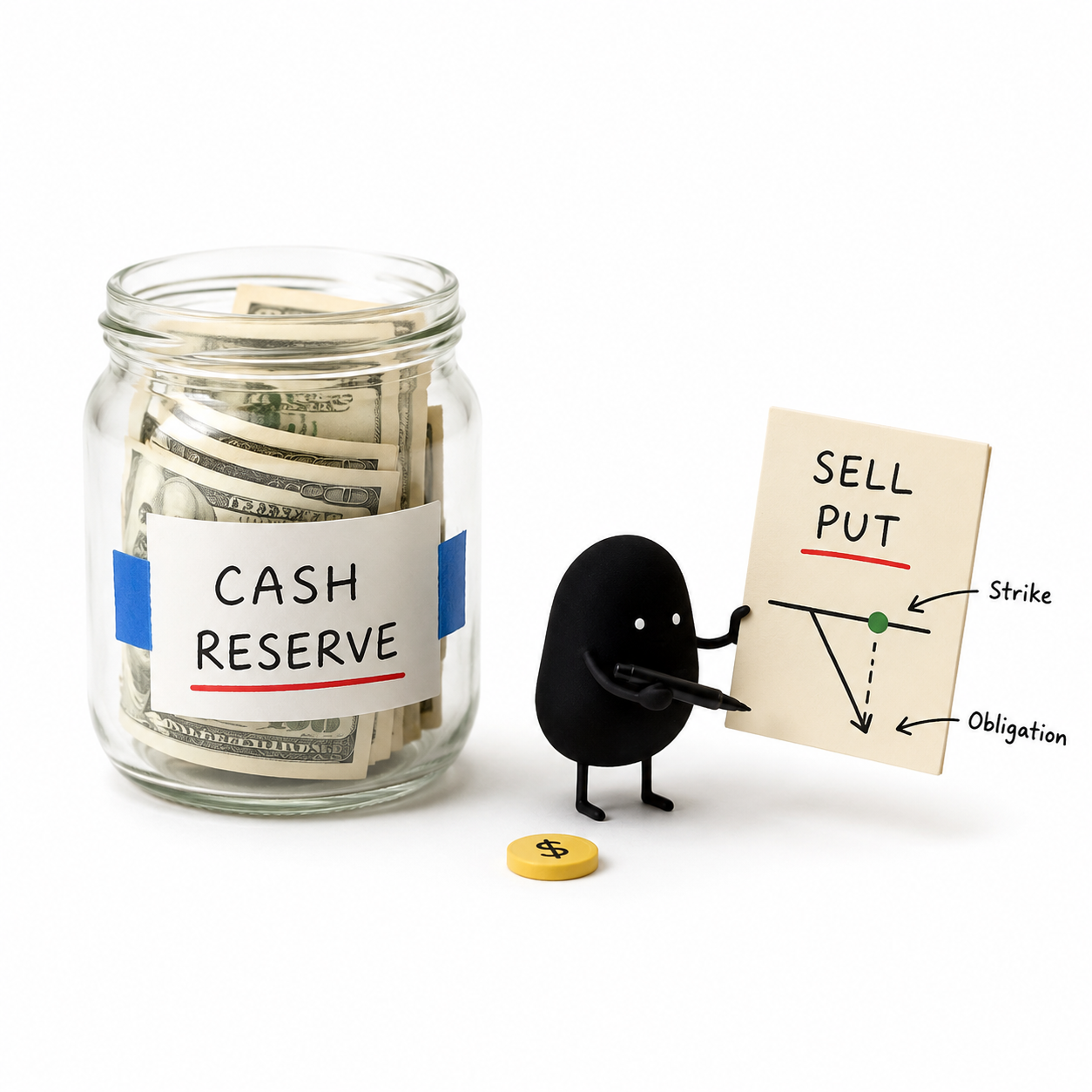
If you already understand Covered Calls, Cash-Secured Puts (CSP) will feel completely natural.
They're two sides of the same coin.
- Covered Call: hold stock → sell call → collect rent
- Cash-Secured Put: hold cash → sell put → collect rent
What Is a Cash-Secured Put?
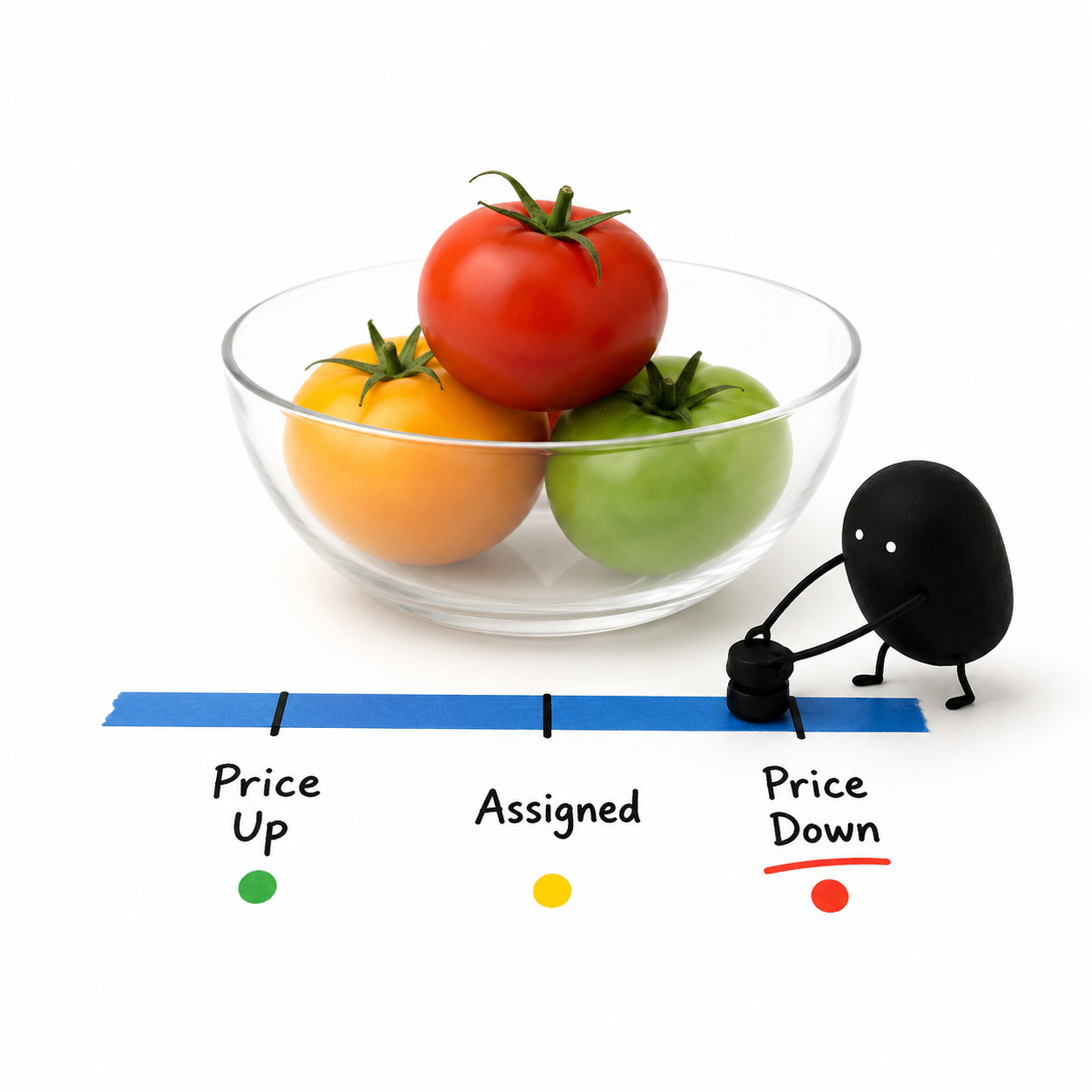
One-line definition: You set aside enough cash in your account (money you're prepared to use to buy the stock), then sell a put option.
Concrete example:
- A stock is currently at $100. You're willing to buy it at $95.
- You sell a $95 strike put, expiring in one month, and receive $2/share in premium ($200 total).
- Your account needs to hold $95 × 100 = $9,500 in cash (the "security").
Result:
- You immediately receive $200 in cash.
- Your obligation: if the stock is below $95 in one month, you must buy 100 shares at $95 (regardless of whether the market is at $90 or $80).
What Happens in Three Scenarios?
| Stock at Expiration | What Happens | Final P&L (per share) | Notes |
|---|---|---|---|
| $110 (big rally) | Option expires worthless, you keep the cash | Net gain $2 (entirely from premium) | Didn't buy the stock, but collected rent |
| $95 (right at strike) | Option exercised, you buy 100 shares at $95 | Stock cost $95 − $2 premium = effective cost $93 | Bought at $2 below the current market price |
| $85 (big drop) | Option exercised, you buy $85 stock at $95 | Paper loss of $10 on stock, but $2 premium offsets → net loss $8 | Lost $7 less than buying at market ($85) |
The Core Logic of Cash-Secured Puts
- Someone pays you to place a buy order: You were already willing to buy at a certain price; now someone's paying you to post that limit order.
- Either collect free rent or buy at a discount: If the stock doesn't fall, you pocket the premium. If it does fall, you buy at an effective cost below market (after crediting the premium).
- Theta is your friend: Every day that passes, the put loses a little time value — you're one step closer to keeping the premium for free.
Why Is CSP Suitable for Beginners?
| Common Beginner Pain Point | How CSP Solves It |
|---|---|
| Don't know when to buy a stock | Set the price you're willing to pay and let the market come to you |
| Limit orders always miss by a little | CSP generates income even when you don't get filled |
| Buy it and it drops immediately, psychologically crushing | Premium provides a downside buffer |
| Worried about unlimited seller risk | CSP is cash-secured — maximum risk is buying the stock (manageable) |
Symmetry with Covered Calls:
| Covered Call | Cash-Secured Put | |
|---|---|---|
| You hold | Stock | Cash |
| You sell | A call option | A put option |
| You hope | Stock doesn't exceed the strike | Stock doesn't fall below the strike |
| Worst case | Stock gets called away | Forced to buy the stock |
| Risk | Stock falling | Stock dropping sharply |
Practical Guide: Choosing Your Strike and Expiration
Strike selection:
- Slightly OTM (5%-10% OTM): Stock at $100, sell the $90–$95 put. Moderate premium, good safety margin.
- At the money (ATM): Stock at $100, sell the $100 put. Higher premium, but more likely to be assigned (close to current price).
- Deep OTM (>15% OTM): Very low premium, rarely assigned — this feels more like "pure rent collecting" than "wanting to buy the stock."
Beginner advice: Sell puts at the price you genuinely want to buy. Don't chase higher premium at a price you wouldn't want to own.
Expiration selection:
- 3-6 weeks: Most beginner-friendly. Not too short or too long; premium is fair, management frequency is reasonable.
- 1 week: Less premium, but more flexibility. Works in high-volatility environments.
- 2-3 months: Higher premium, but capital is locked up longer. Works in low-volatility environments.
A Complete CSP Workflow
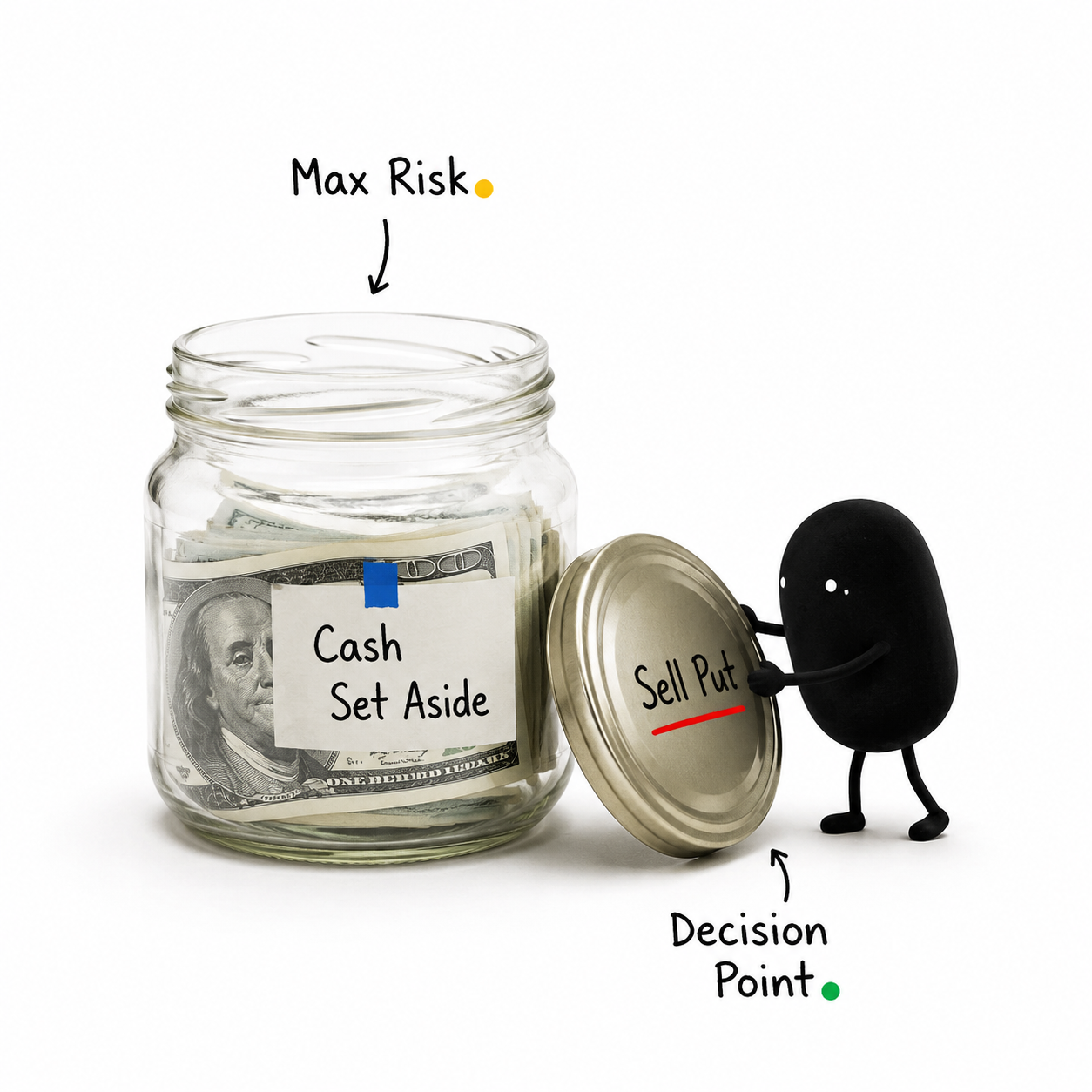
- Pick a stock you're willing to hold long-term (the same type you'd use for a Covered Call).
- Determine the price you're willing to buy at (e.g., stock at $100, you'd buy at $90).
- Sell the corresponding put, collect the premium.
- At expiration:
- If stock > strike: put expires worthless, you pocket the premium for free. Repeat Step 3.
- If stock < strike: you buy shares at the strike. Then — you can start running Covered Calls.
The Seamless Link from CSP to Covered Call
This is the seed of "The Wheel Strategy":
CSP (collect rent / buy at a discount) → get assigned → Covered Call (collect rent / sell stock) → stock gets called away → back to CSP
This process forms a cycle. The next article will lay out the full "Wheel Strategy."
Three "Don'ts" for Beginners
- Don't sell puts on stocks you don't want to own. If you'd panic after assignment, the strategy breaks down.
- Don't sell puts you don't have enough cash to cover. "Cash-secured" means you must have enough money in the account to buy the shares. Selling a put is not risk-free.
- Don't sell puts before a potential crash (e.g., earnings). A sharp drop means you'll buy at the strike price, potentially far above market value.
One-Line Summary
Cash-Secured Put = someone pays you to place a limit buy order. Either keep the rent for free, or buy the stock you want at a lower effective cost.
Once you've mastered both Covered Calls and Cash-Secured Puts, you have the most classic "rent-collecting system" in the options world. In the next article, we string them together — The Wheel.