
Options Basics: Calls, Puts, and Payoff Diagrams
Many people's first impression of options is "highrisk gambling," but that's usually a matter of using the tool wrong rather than a problem …
This is the first article in the options primer series, written for readers with zero options experience. By the end you'll be able to read an options quote, understand the payoff of the four basic positions, and know what actually determines a premium.
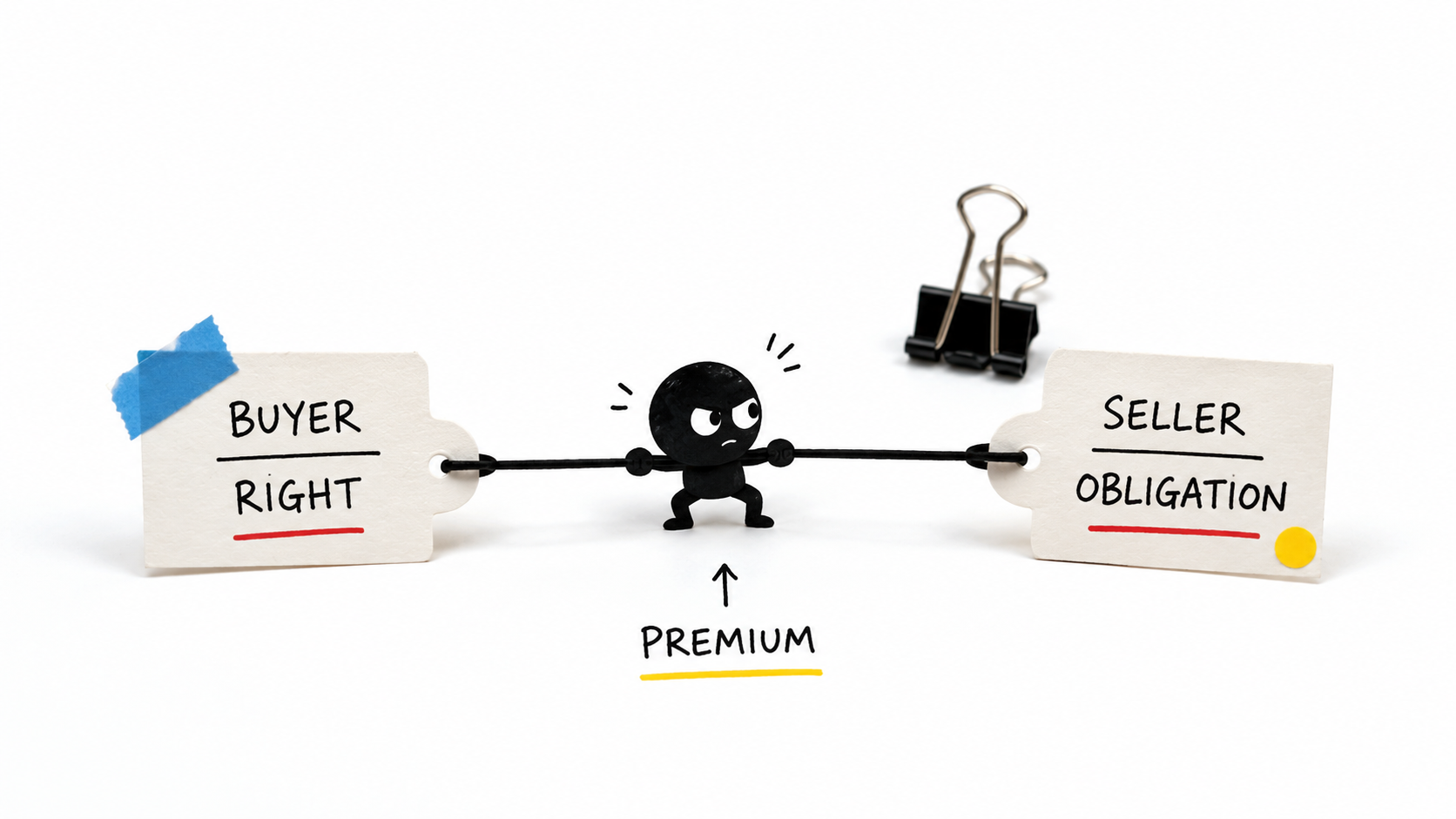
Many people's first impression of options is "high-risk gambling," but that's usually a matter of using the tool wrong rather than a problem with the tool itself. An option is fundamentally a contract: it grants the buyer the right, but not the obligation, to buy or sell an underlying asset at a set price by a set date. Once you understand how "rights" and "obligations" are split, you understand most of options.
Two Types: Calls and Puts
There are only two basic option types; every complex strategy is built from them.
- Call: the buyer has the right to buy the underlying at the strike price. Bullish — you expect the price to rise.
- Put: the buyer has the right to sell the underlying at the strike price. Bearish, or insurance for a holding.
Every contract has a buyer and a seller, with opposite rights and obligations:
| Role | Direction | Right / Obligation | Profits when |
|---|---|---|---|
| Buy Call | Long Call | Right to buy | Price rises sharply |
| Sell Call | Short Call | Obligation to sell | Price flat or down slightly |
| Buy Put | Long Put | Right to sell | Price falls sharply |
| Sell Put | Short Put | Obligation to buy | Price flat or up slightly |
Key point: buyers pay premium, gain rights, and have limited risk (most they lose is the premium); sellers collect premium, take on obligations, and have limited reward (most they earn is the premium). The Wheel strategy is robust precisely because it only takes the seller side.
Reading an Options Quote
A typical quote looks like this:
AAPL  2026-07-17  C  190    $4.20
sym   expiration  type strike premium
Breaking it down:
- Underlying: the stock or ETF the contract is based on — here, Apple.
- Expiration: the date the right expires. Further out costs more due to greater uncertainty.
- Type (C/P): Call or Put.
- Strike: the agreed transaction price.
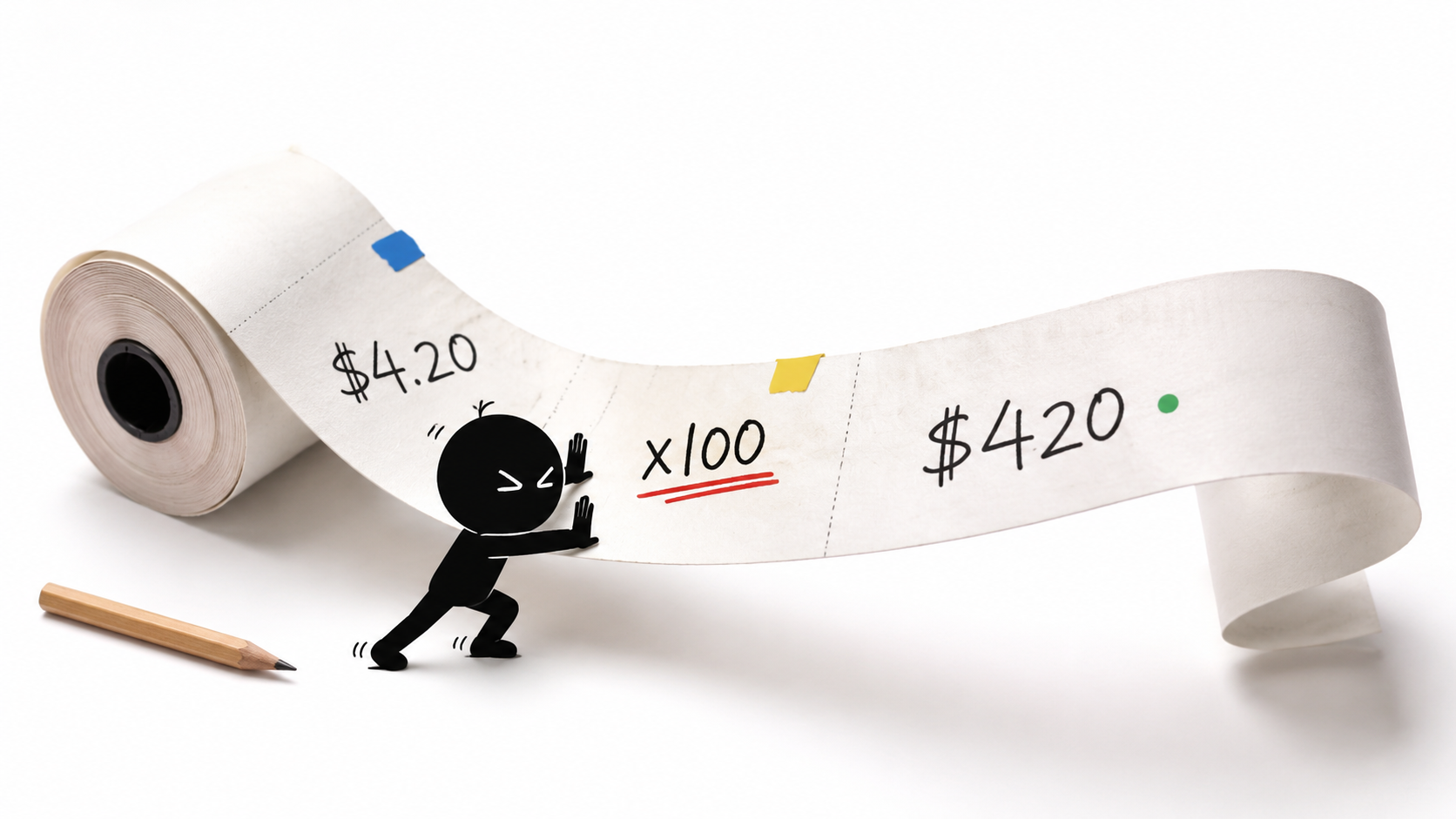
- Premium: the price the buyer pays the seller. Note one contract usually covers 100 shares, so
$4.20is actually$420.
Payoff Diagrams: Four Lines
The most intuitive way to understand options is to draw the payoff at expiration (x-axis: stock price at expiration; y-axis: profit/loss).
Take buying one Call with strike 190 and premium 4.20:
- Price below 190: don't exercise, lose the full premium
-$420. - Price equals 194.20: break-even (strike + premium).
- Price above 194.20: every $1 up adds
$100of profit, theoretically unlimited.
You can remember the four basic shapes like this:
- Buy Call: a "hockey stick" rising on the right — capped loss, unlimited gain.
- Sell Call: the mirror image — capped gain, unlimited loss.
- Buy Put: rises on the left — the harder it falls, the more you make.
- Sell Put: the mirror image — this is the opening move of the Wheel.
What Determines the Premium
Premium = intrinsic value + time value.
- Intrinsic value: what you'd make exercising right now. If the stock is 195 and the Call strike is 190, intrinsic value is 5.
- Time value: what you pay for the hope of "it could go higher." It's driven by three factors:
- more time remaining is more expensive;
- higher implied volatility (IV) is more expensive — bigger expected moves mean pricier options;
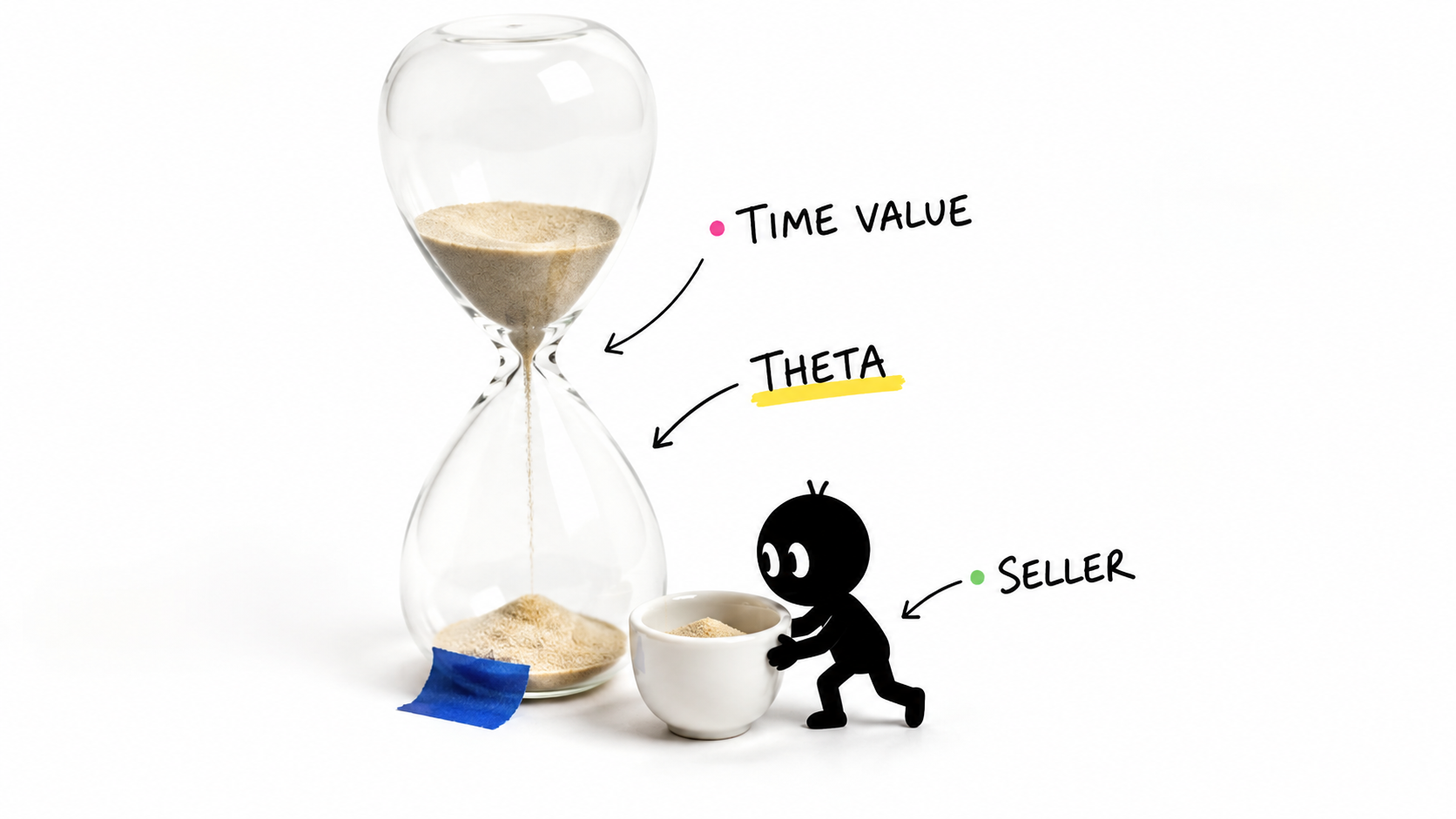
- the closer to expiration, the faster time value decays — this decay is called Theta.
For an option seller, time decay is your friend. After you sell an option, as long as the price doesn't move sharply against you, every passing day brings your position closer to profit — that's the underlying logic of "collecting rent by selling options."
Three Common Beginner Mistakes
- Only buying, never selling: buyers need both direction and timing right, so the win rate is naturally low. Most consistently profitable retail traders are net sellers.
- Ignoring the contract multiplier: seeing
$4.20and thinking it's pocket change, when one contract is actually$420— it's easy to oversize. - Chasing high IV: IV spikes before earnings, options look "about to explode," then IV collapses afterward (IV Crush) — you can be right on direction and still lose.
Next Steps
With these basics down, you can move on to more practical material:
- how to sell cash-secured puts (CSPs) to collect premium;
- how to keep collecting with covered calls after assignment;
- string them together and you get the Wheel strategy this series keeps referring to.
Options aren't gambling — they're a business about probability and time. Learn the rules first, then talk strategy.