
Options Basics: Buyers vs. Sellers
There's a dividing line in the options world: buyers and sellers. Beginners are often drawn to the phrase "buy a call, limited loss, unlimit…

There's a dividing line in the options world: buyers and sellers.
Beginners are often drawn to the phrase "buy a call, limited loss, unlimited upside," and naturally land on the buyer's side. Then there's another group quietly collecting premiums — earning time's decay — they're the sellers.
Neither is absolutely better; it's about fit. But 99% of beginners miss one critical point: they only see buyer "get-rich stories" and overlook seller "survival rates."
This article lays both sides completely bare.
The Buyer: Small Bet, Big Event
How it works: Pay a premium and gain the right to buy/sell at a specific price in the future. If the expected move never happens, your maximum loss is just that premium.
Best suited for: Expecting a large, fast, one-directional move. Examples: an earnings beat, a surprise event, a breakout past a key level.
| Dimension | Buyer Characteristics |
|---|---|
| Maximum Loss | Premium paid (limited) |
| Potential Gain | Theoretically unlimited (long call) |
| Win Rate | Lower (typically <30%) |
| Time | Enemy (Theta erodes value daily) |
| Volatility | Best to buy at low IV, sell at high IV |
Common beginner illusion: "Limited loss = safe." Wrong. Limited loss doesn't mean low probability of loss. Buy ten times, lose nine, each time down $1,000, win once for $5,000 — you're still net negative.
The buyer's real risk: Not "losing everything" in one trade, but sustained small losses that grind down capital and confidence.
The Seller: Sell Insurance, Collect Rent
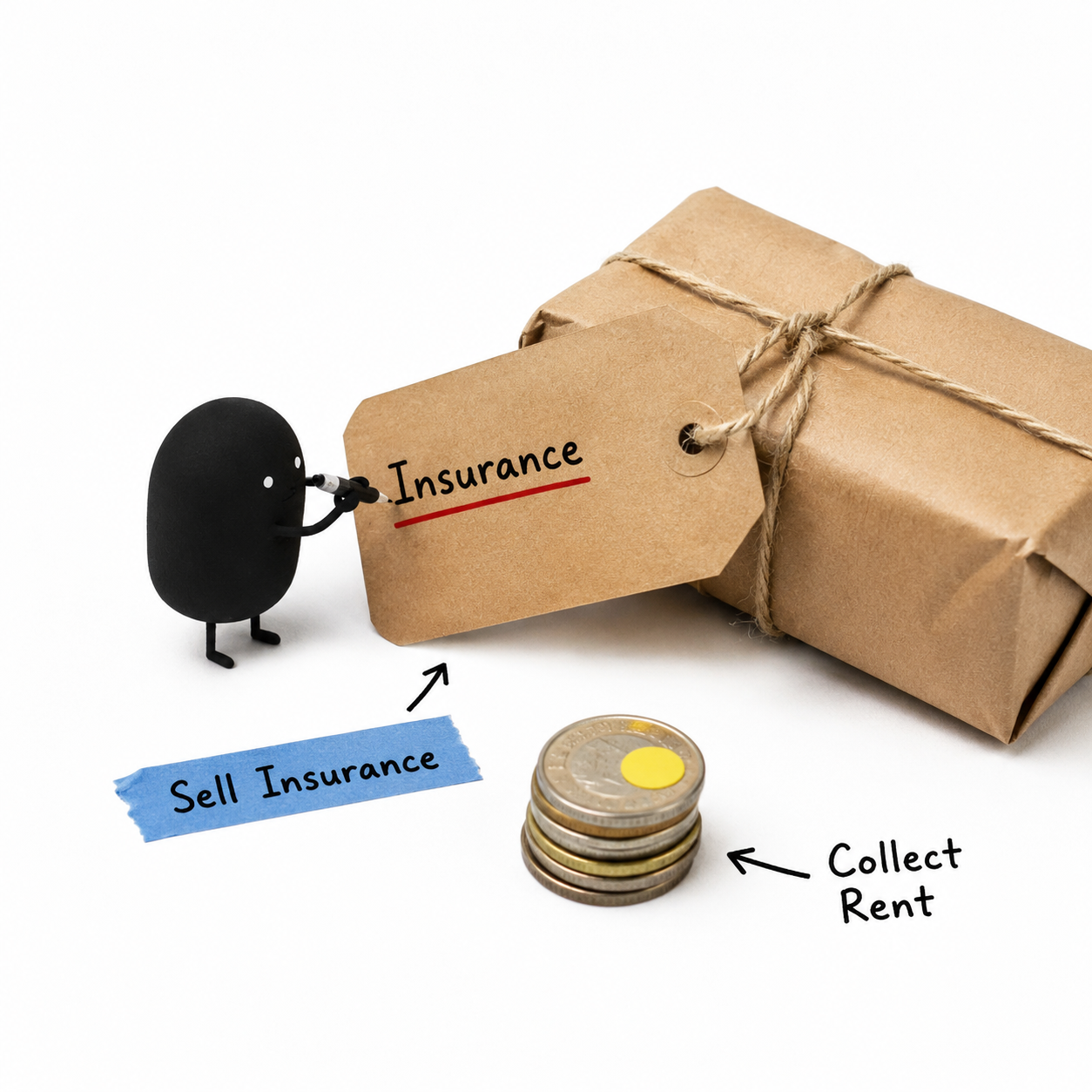
How it works: Collect a premium upfront (the "insurance"), take on the obligation to transact at the agreed price in the future. If the market stays within the agreed range, you keep the money.
Best suited for: Expecting sideways action, small moves, or prices not breaking a certain level.
| Dimension | Seller Characteristics |
|---|---|
| Maximum Loss | Theoretically unlimited (naked) or large (hedged) |
| Potential Gain | Premium received (limited) |
| Win Rate | Higher (typically >60-70%) |
| Time | Friend (Theta earns for you every day) |
| Volatility | Best to sell at high IV, buy back at low IV |
The seller's real risk: One black-swan event can wipe out dozens of small wins. Example: the XIV collapse in February 2018.
Key Comparison: Completely Different Sources of Profit
| Buyer | Seller | |
|---|---|---|
| Core of how you make money | Direction + magnitude + timing | Time decay + volatility decline + range-bound action |
| Most comfortable scenario | Price explodes up or down | Price doesn't move |
| Most uncomfortable scenario | Price goes sideways | Price moves sharply against you |
| Personality fit | Patient enough to wait for breakouts, can handle frequent small losses | Seeks consistency, dislikes big swings |
Direct Advice for Beginners
Consider being a buyer if you:
- Can accept losing 60-70% of trades.
- Have clear views on direction and timing.
- Have a smaller account and want leverage for elasticity.
Consider being a seller if you:
- Want to earn "high-certainty" small gains.
- Fear large one-directional moves.
- Already hold stocks or futures and want to reduce cost basis via premium income.
A Common Misconception: "Seller Risk Is Unlimited — Beginners Should Avoid It"
That's half right, but it scares away many beginners who would actually thrive as sellers.
"Unlimited risk" refers to naked short selling (no hedge position at all). As a beginner, you can absolutely start with protected seller strategies:
- Covered Call: Hold stock, sell a call. Maximum risk is the stock going down (same as just holding the stock), but you collected extra premium.
- Sell OTM Put (CSP): If you already want to buy a stock at a certain price, selling a put is effectively "someone paying you to place a limit buy order."
Selling isn't the monster — selling naked is.
A Cold Look at "Get Rich" Stories
The posts you see on social media — "some trader bought calls and turned 100x in a week" — never tell you:
- How many contracts they bought (maybe it was $100 total).
- How many times they lost before that (maybe 99 times).
- That extreme deep-OTM options have a Delta of just 0.02 and a win rate below 5%.
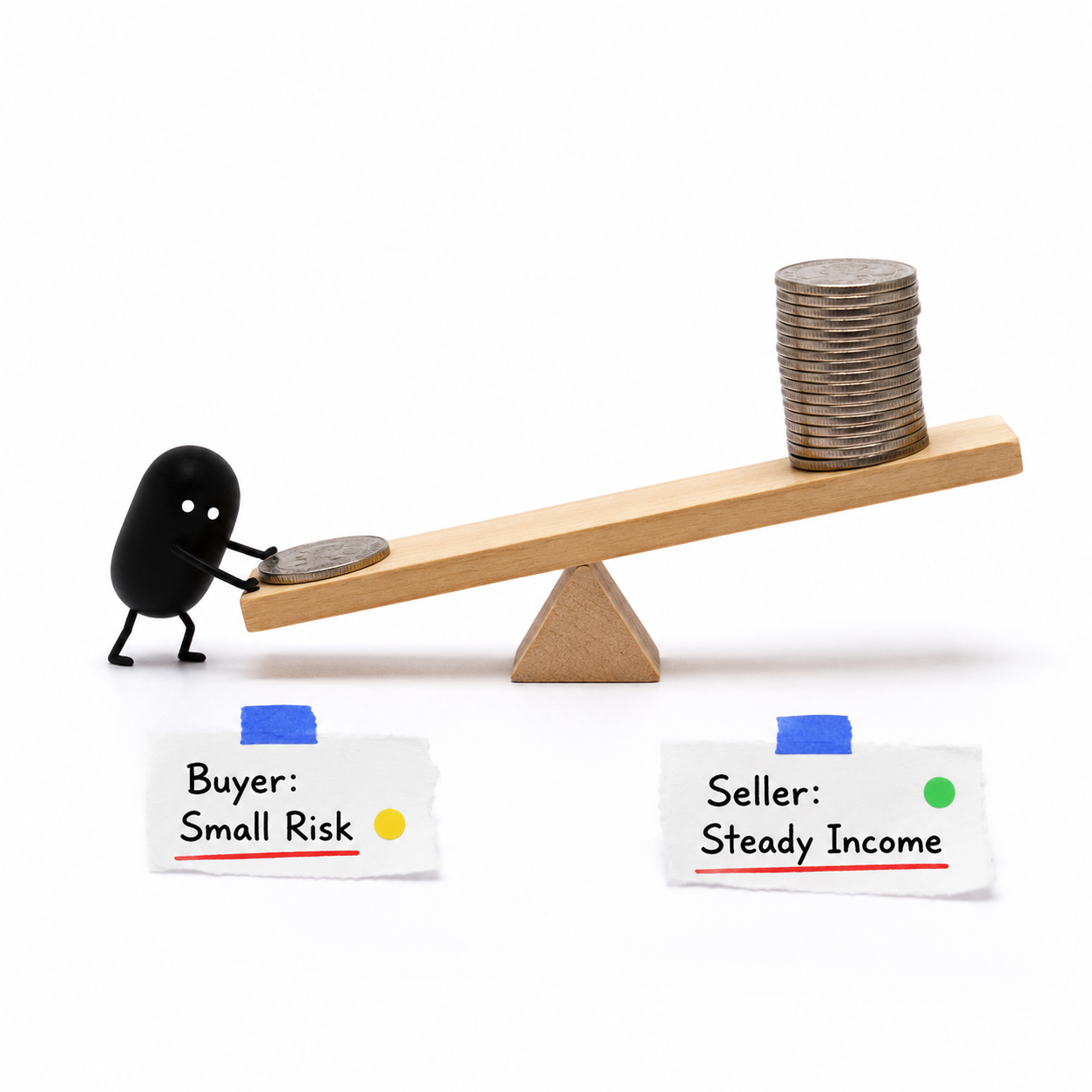
Buyers use low probability to bet on high payoff; sellers use high probability to bet on low payoff. Neither is better — it's about choice and risk management.
One-Line Summary
- Want to be a detective, waiting for the big move and firing one shot — be a buyer.
- Want to be a landlord, collecting rent daily and not minding the slow pace — be a seller.
Next article: we'll confront the least glamorous but most survival-critical topic: the 3 biggest options traps beginners fall into.