
Options Advanced: Greeks in Practice
In the introductory Greeks article, we covered their basic meanings: Delta: How much the option price changes when the stock moves $1 (speed…
In the introductory Greeks article, we covered their basic meanings:
- Delta: How much the option price changes when the stock moves $1 (speedometer).
- Gamma: The rate of change of Delta (the gas pedal).
- Theta: Time decay (melting ice cream).
- Vega: The impact of changes in implied volatility (weather forecast).
If you stopped there, you're a trader who can "read an options quote."
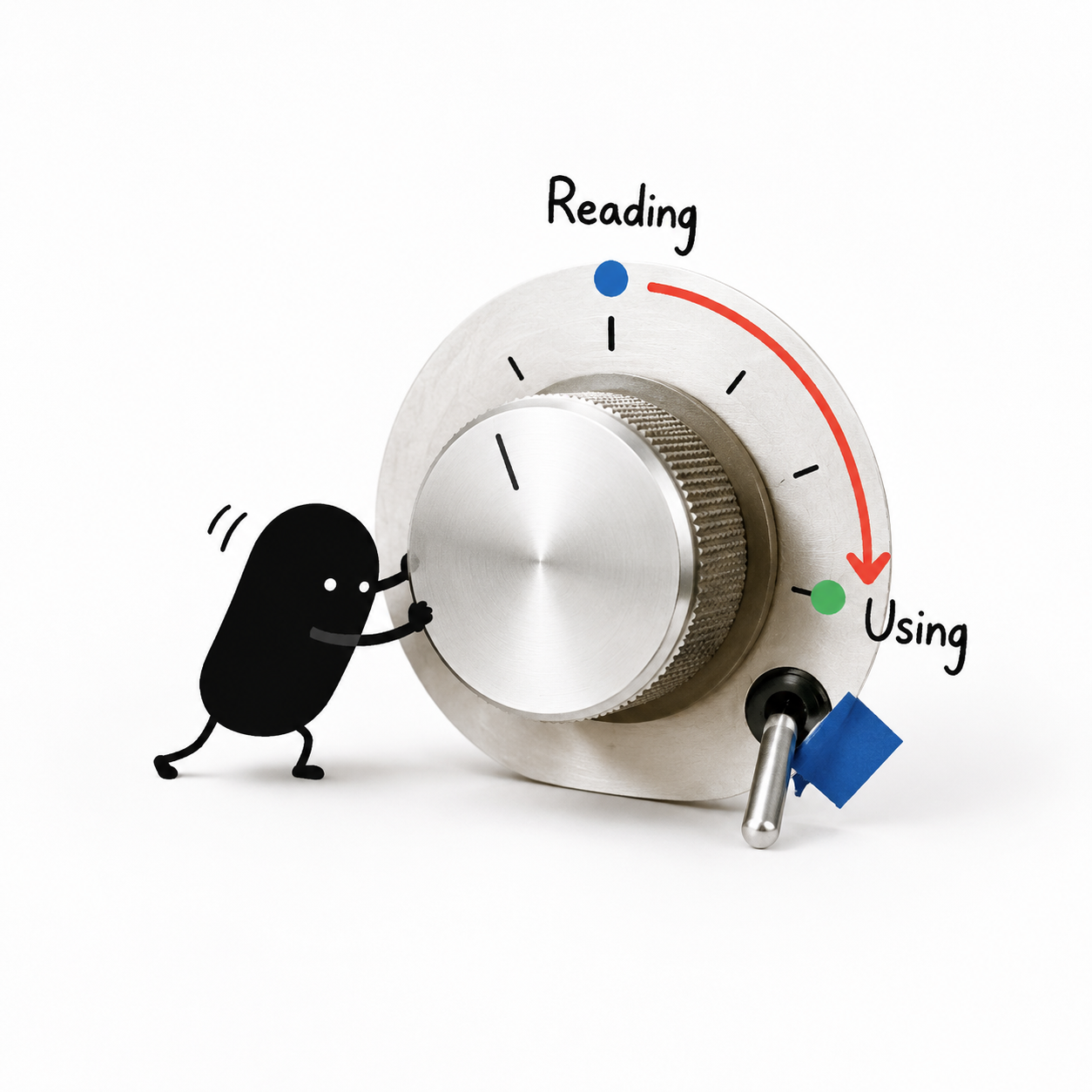
Advanced traders go further: they turn the Greeks into production tools — managing directional exposure with Delta, capturing volatility with Gamma, trading volatility itself with Vega, and collecting rent with Theta.
From "Reading" to "Using": The Advanced Role of the Greeks
| Greek | Basic Understanding | Advanced Role |
|---|---|---|
| Delta | Directional sensitivity | Manageable risk exposure — can be zeroed out, amplified, or reversed |
| Gamma | Rate of change of Delta | Profit engine — repeatedly "scalping" profits in a ranging market |
| Theta | Daily time decay | Rental income — can be designed as a positive cash flow stream |
| Vega | Volatility sensitivity | Independent trading dimension — bet on volatility levels, not direction |
The core mindset shift:
A basic trader asks: "I'm bullish — should I buy calls or sell puts?" An advanced trader asks: "How much Delta do I want? Should Theta be positive or negative? What's my view on Vega?"
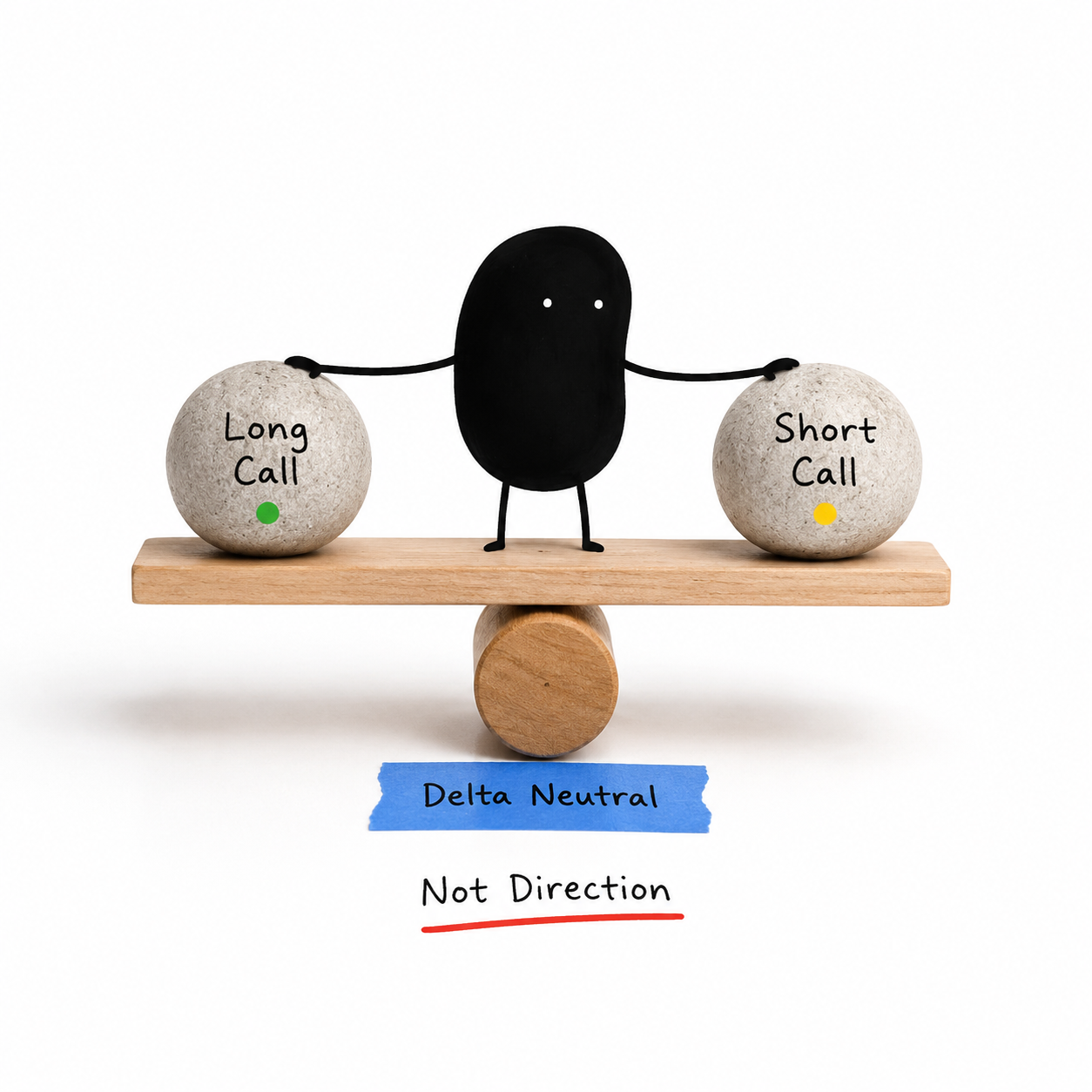
Advanced Skill 1: Delta Neutral — Earn from Other Dimensions, Not Direction
What is Delta neutral?
When a portfolio's total Delta is near 0, the portfolio's value barely changes regardless of small stock price moves up or down. At this point, your P&L no longer depends on directional bets — it comes from Theta (time), Vega (volatility), or Gamma (volatility capture).
Why go Delta neutral?
- Direction is hardest to predict. Stripping out Delta lets you focus on your higher-conviction view (e.g., "IV is too high and will revert").
- This is the core approach of market makers and institutional traders: stay Delta neutral and earn the bid-ask spread and volatility premium.
How to build a Delta-neutral portfolio:
Method 1: Long Straddle + Dynamic Hedging
- Buy an ATM call and ATM put simultaneously (initial Delta near 0).
- As stock rises, portfolio Delta turns positive (call Delta grows, put Delta shrinks in absolute terms). Sell a small amount of stock/futures to hedge Delta back to 0.
- As stock falls, portfolio Delta turns negative — buy stock/futures to hedge.
Result: You profit from the stock moving back and forth via hedging — this is Gamma scalping (detailed in the next section).
Method 2: Build Delta Neutral Directly with Option Combinations
| Strategy | Components | Delta Profile | Primary Profit Source |
|---|---|---|---|
| Calendar Spread | Sell near-month call + buy far-month call | Near neutral | Theta (near-month decays faster) + Vega (far-month more sensitive) |
| Iron Condor | Sell OTM call spread + sell OTM put spread | Near neutral | Theta + Vega decline |
| Butterfly | Buy ATM + sell two OTM/ITM strikes | Near neutral | High payoff in narrow range |
Tip for advanced traders: Start with Iron Condor to practice Delta-neutral thinking. Its Delta is naturally near 0, so you only need to focus on Theta and Vega.
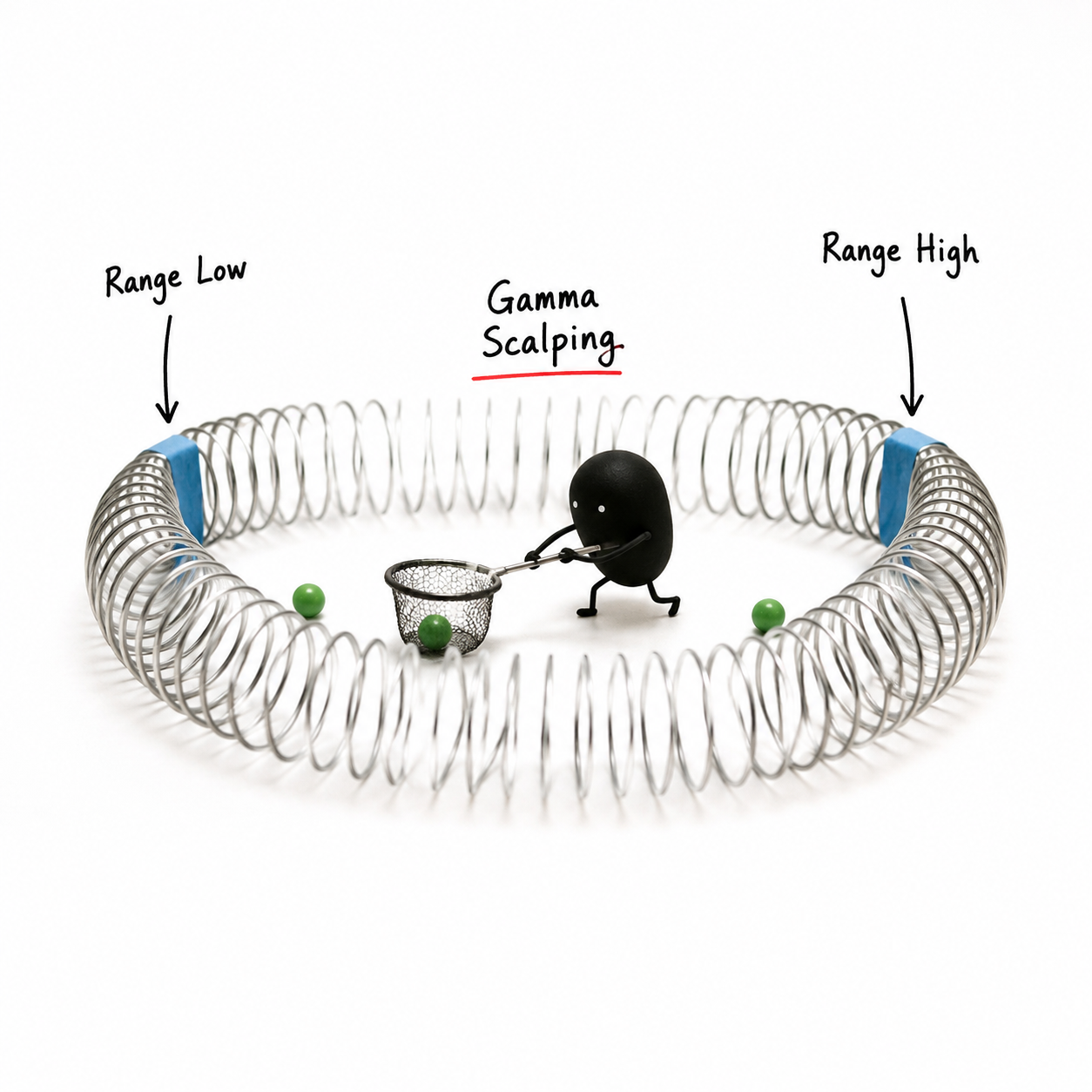
Advanced Skill 2: Gamma Scalping — Harvesting in a Ranging Market
What is Gamma scalping?
When you hold a positive Gamma portfolio (e.g., a long straddle) while staying Delta neutral, every price move generates profit. Here's how:
- Starting state: Delta = 0 (long ATM call + ATM put).
- Stock rises → portfolio Delta goes positive → sell stock/futures to bring Delta back to 0.
- Stock falls → portfolio Delta goes negative → buy stock/futures to hedge.
Core logic: You're repeatedly "selling high and buying low." Every hedge generates profit.
A simplified numerical example:
- Stock at $100. You buy a straddle, Gamma = 0.1 (Delta increases by 0.1 for every $1 rise).
- Stock rises from $100 to $102 → Delta goes from 0 to +0.2 → sell 20 shares to hedge.
- Stock falls from $102 back to $100 → Delta goes from +0.2 back to 0 → buy 20 shares to hedge.
Each round-trip of "rise-sell, fall-buy" has you trimming high and adding low, converting price oscillation into real hedging profits.
Simplified conclusion:
The essence of Gamma scalping: positive Gamma portfolio + dynamic Delta hedging = extracting profit from price volatility. The bigger the moves, the more you scalp.
When does Gamma scalping work?
- You expect the market to swing significantly (but don't know which direction).
- You're willing to trade frequently (may need to adjust hedges daily or even hourly).
- You have sufficient capital and tools (ability to short stock/futures).
Practical advice for most advanced traders: You don't need to manually Gamma scalp. After buying a straddle, simply hold to expiration — if volatility is large enough, the straddle's appreciation already captures the Gamma profit.
Advanced Skill 3: Vega Trading — Make Volatility an Independent Dimension
What is Vega trading?
Don't bet on direction — bet on whether implied volatility (IV) will rise or fall.
- Long Vega: Buy options (especially long-dated, ATM options) to profit from rising IV.
- Short Vega: Sell options (especially short-dated, OTM options) to profit from falling IV.
How to judge whether IV is high or low:
| Metric | Calculation | Usage |
|---|---|---|
| IV Percentile | What % of the past year current IV is above | >70% is elevated, <30% is depressed |
| IV vs. HV Spread | IV minus historical volatility | Large spread → IV may be overpriced |
| VIX Term Structure | Slope of VIX across expirations | Far > near → market expects future volatility to increase |
Typical Vega trade:
Scenario: You judge current IV is at a historical high (e.g., VIX > 30) and expect IV to revert.
Action: Sell an Iron Condor or Strangle to go short Vega. If IV truly falls, your option portfolio gains value even if the stock doesn't move.
Risk: If IV keeps rising (black swan), you'll take a big loss.
Advanced technique: Vega neutralization
If you want to purely trade "direction" or "time decay," you can hedge out Vega:
- Buy a long-dated option (high Vega) while selling one or more short-dated options (low Vega but high Theta) such that total portfolio Vega = 0.
- This way you only earn Theta, undisturbed by volatility changes.
Three-Line Summary
- Delta neutral: Strip out directional bets; focus on earning from time and volatility.
- Gamma scalping: Use a positive Gamma portfolio to repeatedly harvest profit from price oscillation.
- Vega trading: Treat volatility itself as an independent trading dimension.
Next article: When your position goes against you after entry, how do you use Rolling to turn a bad hand into a good one?